Switch Together heat pumps
A simpler way to upgrade your home’s heating
Switch Together heat pumps
Second-Hand September, launched by Oxfam in 2019, is a month-long challenge to shop pre-loved instead of brand new.
Over 50,000 people pledged to shop only second-hand for 30 days in its first year. Since then, the campaign has evolved to highlight the environmental benefits of circular shopping habits encouraging reselling, repairing, re-wearing and donating. It is not just about clothes anymore but about rethinking consumption altogether.
The fashion industry’s environmental footprint is staggering. In the UK, we now buy twice as many new clothes as we did a decade ago in the UK and the EU, annual textiles consumption is over 25 kg per person which is 2-3 times the global average and over 60% of this is clothing. As a nation, how much we spend on clothing, shoes, and accessories is hard to judge, with estimations between researchers varying substantially, but most can agree that it’s in the 10s of billions of pounds.
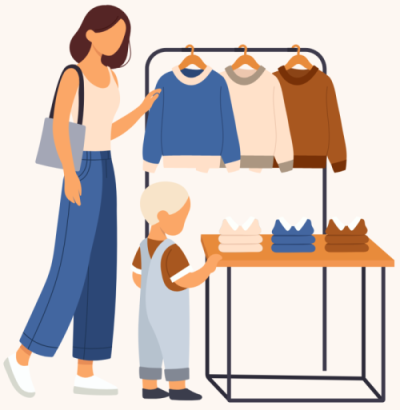

Despite this vast spending, 30-40% of manufactured garments go unsold, ending up in incinerators or landfill. Every year, 350,000 tonnes of clothing get sent to landfills in the UK, equivalent to around eleven million items of clothing being discarded weekly. Though consumers can take clothes to textile recycling bins, less than 1% of the materials used to make clothes are being recycled into new garments.
The House of Commons Environmental Audit Committee says there is a basic problem with an industry that relies on persuading people to throw away good clothes because they are “last year’s colour”.
The global fashion industry is vast and unsurprisingly makes a sizeable contribution to climate change, responsible for up to 10% of global carbon emissions. If everyone in the UK participated in Second-hand September, the country would save the same emissions as flying a plane around the world nine hundred times. It’s also important to remember that 90% of UK clothing is imported, meaning the supply chain emissions escape the UK government’s progressive climate goals.
And it’s not just climate change and global warming that fashion’s footprint effects, on a more local level, fast fashion production is linked to numerous environmental and social impacts which occur as cost-cutting sacrifices workers’ rights and conditions, along with pollution and environmental degradation. Even once purchased, washing synthetic garments is associated with the distribution of microplastics into our water supply.
Though from a sustainability perspective natural textiles are touted as the better option they still have a significant environmental footprint, be it the water demand and pesticide use for certain textile crops or issues associated with large-scale livestock production for leather, wool or fur.
What is essential to remember is that those directly and locally involved in production and impacted by the local ecological destruction are rarely the ones driving the demand.
“These staggering facts about fashion’s impact on the planet and the world’s poorest people should make us all think twice before buying something new to wear,” said Oxfam’s previous chief executive, Danny Sriskandarajah.
However, there are ways to improve the industry so that we don’t lose our liberty to dress and express ourselves as we like. One of the most promising solutions? The growth of the Second-hand market.
The second-hand market isn’t new its ancient but from an economic perspective it has exploded in recent years in the UK, with large swathes of the population regularly shopping second-hand across a range of products. The UK’s second-hand sector is now worth more than £7 billion, and it is estimated that about 25% of fashion transactions in the country now go for resale. Forecasts indicate that by 2029, this subsector will account for 10% of total fashion expenditure.
The rate of growth of the second-hand market is fivefold that of general clothing retail and is predicted to witness a compound annual growth rate of 9.3% through to 2034.


Online resale platforms like Vinted, eBay and Depop are leading the way, fuelled in large part by London (London holds about 35% of the UK’s second-hand apparel market share) and the younger generations, as over half of second-hand clothing consumers are from the post-millennial generation. This year, the Lithuanian online resale company Vinted made headlines as it became the largest clothing retailer in France by volume of clothes sold.
The environmental benefits of second-hand fashion are hard to ignore. While estimates vary, studies suggest that switching to second-hand garments can reduce climate change impact by up to 90% in some scenarios. More conservative figures still show a 42% reduction in emissions, 42% less cumulative energy demand, and 53% less water scarcity footprint per use. Regardless of which stat you lean on, the message is clear: second-hand is a powerful tool for lowering fashion’s environmental toll.
But the ripple effects go beyond just carbon. Increased awareness of second-hand fashion often leads to more conscious consumer habits across other sectors: from furniture and electronics to books and homeware. It is part of a broader shift toward circular consumption, where reuse, repair, and rental are becoming increasingly mainstream.
Clothing rental is gaining popularity, especially for event wear, replacing single use purchasing of garments. Additionally, a change in attitudes towards single wear is also arising with growing attitudes online about getting down your cost per wear. Though often the driving force of consumption and trend-driven purchasing, social media has provided a space to publicise sustainable shopping with content linked to investing in clothing and hunting for unique items second hand. The rise of “cost per wear” logic, sometimes dubbed “girl math” encourages shoppers to invest in pieces which can be styled multiple ways and worn across various occasions. We are even seeing this logic appearing in the bridal market, historically, the epitome of single-wear fashion.
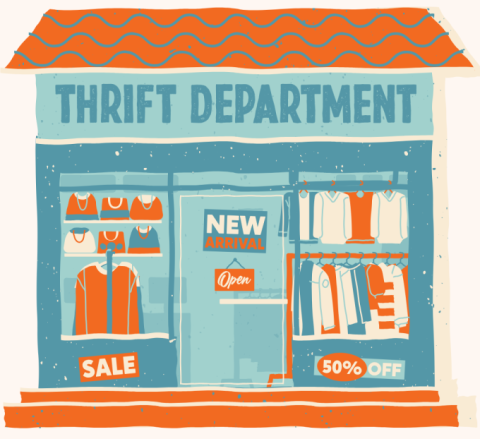
Second-hand fashion isn’t just being used as a compromise or an environmentally driven choice, its associated with a movement of seeking individual choices with people engaging with the “thrill of the hunt” whether that’s spending day trawling through charity shops on a day off or carefully monitoring changing prices on resale platforms the excitement of finding a bargain is now something to be celebrated. Whether this is trying to hunt down a piece you loved from a few seasons ago, which you were unsure about or uncomfortable about coughing up the cash for, finding a high-quality garment which would have been outside of your price range or discovering a vintage piece from a brand or designer you would never have considered looking at.
Second-hand shopping is not the sole solution to fashion’s large footprint. Overconsumption is still a huge issue. Although sourcing second-hand products reduces the environmental burden, lower prices increase demand and thoughtless purchasing. Which mean when people are also shopping new, they are hunting for similar cheaper pricing which links to cost-cutting in production associated with lower quality and greater social and environmental impacts. Moving away from this requires a larger society-wide switch to living with less, holding onto pieces for longer, and investing in pieces that last.
Our transforming shopping habits are also changing the make-up of the high street with a decrease in in-person shopping. Though resale and second-hand shopping can support in-person shopping, the margins and a multi-seller industry mean it is a more complex business model to maintain physical locations. High streets across the UK face issues with empty shops, and clothing retailers have been some of those dropping in-person locations. Though second-hand charity shops are becoming more common with an increase in the number of shops by 30% since 2008, they too are feeling the pinch with rising costs and decreased expenditure.


Across Suffolk, more and more homeowners are looking for ways to make their homes more sustainable and reduce their...
Almost 2,000 Suffolk households taking a...
Since 2023, the Net Zero Innovation Fund from Suffolk’s Public Sector Leaders has provided £100k worth of grants to...
Homes from hemp: a more sustainable...