Homes from hemp: a more sustainable...
Since 2023, the Net Zero Innovation Fund from Suffolk’s Public Sector Leaders has provided £100k worth of grants to...
Homes from hemp: a more sustainable...
Kada Research assesses the social value impact of the Suffolk Climate Emergency Plan (SCEP). The study assesses a mix of tangible and intangible social, health and environmental benefits, showing the value of the plan and its work so far, along with a projection of the anticipated growth of the value provided by the plan.
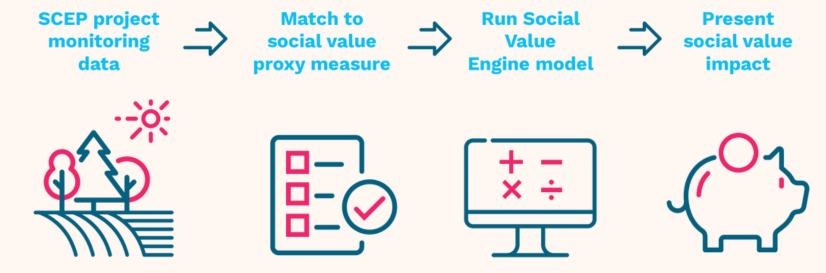
newsThe newly published report produced by Kada Research monetises the social impacts of projects undertaken within The Suffolk Climate Emergency Plan (SCEP). The proposed social value calculations incorporate social return on investment (SROI) principles to quantify health, well-being and environmental outcomes delivered by the plan. The Social Value Engine (SVE) was used to calculate financial proxies for various outcomes from numerous evidence bases.
The SCEP was published in 2021 and laid out a plan to reach net zero as a county in response to Suffolk’s Borough, District and County Councils declaring a ‘Climate Emergency’ in 2019. The plan was revised in 2023 to focus on behaviour change and the co-benefits of climate change action, particularly social and health benefits.
Aware no single individual or organisation is responsible for Suffolk’s emissions; the theme aims to increase communication and cooperation across the county between various stakeholders. It aims to maximise low-carbon energy opportunities by leveraging public and private sector investment and drive behavioural change by engaging with people, organisations, and communities to improve climate literacy and highlight the co-benefits of action.
Results:
So far, £2,449,000 of measurable social value impact has been generated by activities under the Collaborative Action theme. Over 10 years, this activity’s long-term social value impact is projected to be worth £9,630,000.
Alongside social value impacts, projects have fostered numerous co-benefits. Community resilience and cohesion have improved through the encouragement of community collaboration within projects, which has been facilitated by increased grant availability for communities to implement and grow projects. With the expansion and growing visibility of projects, social acceptance of sustainable energy and low-carbon measures is increasingly becoming normalised.
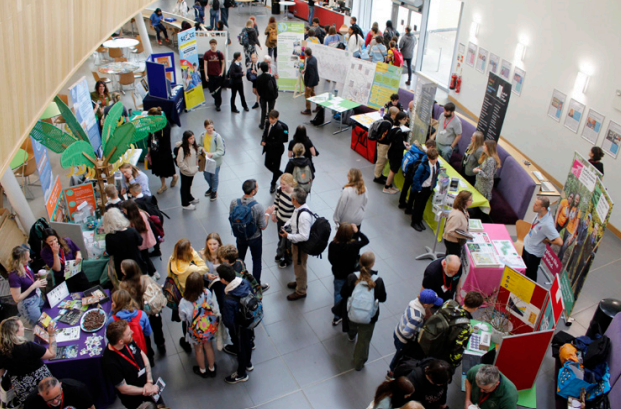
The Youth Climate Conference, which falls within this theme, has been a huge success in increasing climate literacy and public awareness, with hundreds of students and their teachers attending since its onset in 2023. The communication within the event is poignant with 91% of students in attendance feeling inspired to do more and encourage others to act. The event has also spurred the establishment of the Sustainable School Network, which works with 26 schools.
Increasing the energy efficiency of Suffolk’s housing stock is essential to reduce household emissions, which accounted for 27.2% of emissions within Suffolk in 2022. Increasing the Energy Performance Certificate (EPC) of homes increases property value for residents and reduces their energy bills whilst cutting associated emissions.
Results:
So far, £48,532,000 of measurable social value impact has been generated by activities under the Sustainable Homes theme. Future value projections are difficult to predict as the value is intrinsically linked to current domestic energy prices.
Improving household energy efficiency and ease of heating helps to avoid adverse health issues associated with damp and cold homes. A review by Public Health Wales found that for every £1 spent improving energy efficiency and warmth in vulnerable households, there is a return of between £1.87 and £4 in health benefits.
The growing demand for housing to be retrofitted is creating new skilled green jobs, future-proofing the sector, which is accompanied by increased market growth and inward investment for retrofit projects.
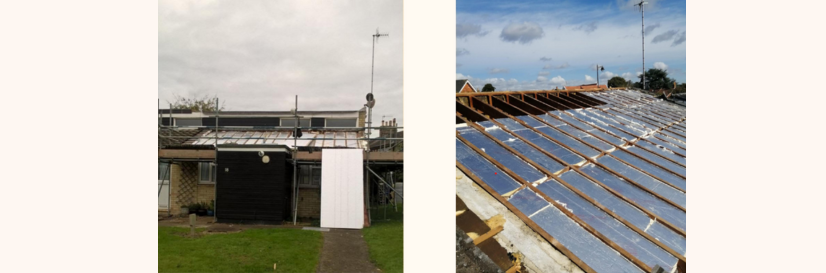
A retrofit project in Woodbridge involving 22 bungalows with EPC ratings of E saw after just 17 weeks of work insulating the properties an improvement of rating to C, which led to a yearly £295 saving in energy bills for residents. In turn, the project also created six full-time jobs.
Warm Homes Suffolk
Warm Homes Suffolk is an £18 million grant which provides support to insulate and improve the energy efficiency of private homes for owners, tenants and landlords (where there is no gas central heating and the total annual income for the occupants is less than £36,000). This project focuses on improving the EPC ratings from inefficient D, E, F and G ratings to C or higher. The interventions delivered under Warmer Homes Suffolk has seen upgrades made in 1,368 properties, saving 1,760 tCO2(e) in carbon emissions. These improvements to the condition of homes across the county has generated £1,408,000 of measurable social value impact.
Community Thermal Imaging Project
The Community Thermal Imaging project provided community groups with thermal imaging cameras to conduct heat loss surveys of buildings to highlight where heat is escaping and better target measures to improve household energy efficiency. It has been delivered in two phases between November 2022 to April 2023 and November 2023 to April 2024. The evidence suggests that £378,000 of measurable social value impact has been generated by activities under the Community Thermal Imaging Project, which has involved 117 communities. Over the next 10 years, this activity’s long-term social value impact is projected at £1,485,000.
Transport accounted for 37.9% of the County’s CO2 emissions in 2022. This theme aims to reduce the use of fossil-fuelled vehicles in Suffolk by encouraging the use of electric vehicles, encouraging less carbon-intensive travel methods and improve freight efficiency.
Results:
So far, £267,000 of measurable social value impact has been generated by activities under the Low Carbon Transport theme, and over 10 years, the long-term social value impact is projected to be £1,048,000.
Reducing vehicle usage and switching to EVs will reduce air pollution, notably particulate matter, which, alongside increased active travel, will improve public health and well-being. Reduced personal vehicle usage in favour of other transport methods may lead to personal savings associated with fuelling and parking along with reducing congestion, which benefits businesses reliant on driving and the efficiency of bus travel.
Industry, business and the public sector contributed 29.4% of Suffolk’s carbon emissions in 2022. Reducing emissions across these sectors requires buy-in from a range of stakeholders. Many businesses have already set their own decarbonisation and sustainability targets. To facilitate emissions reductions in these sectors, organisations require support, guidance and encouragement.
Results:
So far, £879,000 of measurable social value impact has been generated by activities under the Industrial and Commercial Energy use theme. Over 10 years, this activity’s long-term social value impact is predicted to be £3,453,000. Raising awareness of the climate emergency in the workplace fosters a sense of shared responsibility between organisations and trickles down into households and communities. Increasing climate literacy across Suffolk equips individuals and communities with the knowledge and skills to understand the impact of emissions and encourage positive action.
Pressure and aspiration to decarbonise promotes innovative thinking and potential access to new markets and growth across Suffolk to improve capability and create sustainable assets in the region. Reducing carbon emissions can lead to financial savings in the future, particularly towards increasing energy efficiency of operations and resilience in the face of potentially turbulent markets.
Carbon Charter
The Carbon Charter was launched in 2010 by Suffolk County Council and the Environment Agency as a means for local businesses to verify their achievements. It has evolved into Suffolk’s well-known hub for business sustainability. The Charter supports and recognises businesses throughout Norfolk and Suffolk as they take positive action towards net zero. Providing a benchmark for sustainable business, the Carbon Charter continues to develop an ever-growing suite of available resources. The scheme has three tiers, encouraging businesses to continually push themselves to reduce carbon emissions. Since its onset over 500 individual businesses have been accredited.
Demand for renewable energy continues to grow, with power-related emissions decreasing yearly since 2005. Small-scale energy generation from rooftop solar has been proven to reduce demand on the national grid with more locally produced energy; beyond household energy generation, interest in community-led ownership and participation in energy initiatives is growing with complementary engagement from the UK Power Networks. Businesses have also been supported in finding more sustainable ways to power their operations. The public sector has led the way in transitioning civic buildings to renewable energy sources. These transitions help support the development of an environmentally friendly grid that utilises renewable energy and decreases reliance on imported energy markets.
Results:
So far, £169,000 of measurable social value impact has been generated by activities under the Cleaner Power theme. Over 10 years, this activity’s long-term social value impact is predicted to be £663,000. The advancement of Low Carbon Heat Networks offers the opportunity to significantly reduce residents’ costs and contribute to alleviating fuel poverty. This is further supported by collaborative energy planning projects increasing grid flexibility. Communities and businesses have been empowered to take action, leading to the creation of community-led energy decarbonisation projects.
Shifting towards renewables improves air quality, improving resident health and well-being. Also, increasing community ownership of renewable power production increases energy security and reduces demand on the National Grid and imported power, protecting against fluctuations in energy costs. Increased awareness and engagement of these projects should lead to greater social acceptance and community engagement in future initiatives.
Solar Together Suffolk
Solar Together Suffolk is a project run by Suffolk County Council on behalf of the partnership which aims to increase the number of Solar Photovoltaic Panels (PVs) and battery storage systems across the county. The scheme is designed for homeowners, renters (with permission), SMEs, and Commonhold Associations to benefit from a collective purchasing model to secure a great deal on solar PV and battery storage. Pre-vetted and certified installers compete in the lowest-price auction to deliver this to residents. So far 2,384 PVs have been installed saving 2,026 tCO2(e) in carbon emissions. This project has provided £59,000 in social value impact so far.

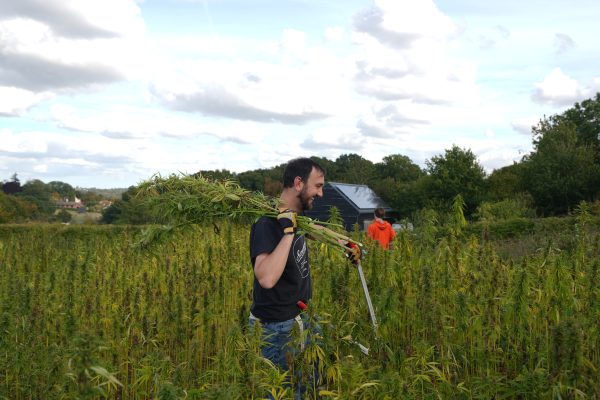
Since 2023, the Net Zero Innovation Fund from Suffolk’s Public Sector Leaders has provided £100k worth of grants to...
Homes from hemp: a more sustainable...Right now, people across Suffolk are living in homes that are not well-equipped to keep the heat they generate...
Incredible result for Suffolk homeowners
Did you know that if all the wrapping paper thrown away over Christmas in the UK was laid end...
Green gift wrap